Sample deliverable — Instructor-led training package
The SOP and the job aid are things people read on their own. This is different — a facilitator stands in front of a room and teaches it. That changes what has to be built: not just content, but a sequence, a script, an activity that puts the skill under real pressure, and a guide that lets someone other than the person who wrote it actually run the room.
Each piece does a different job. The deck carries the room. The handout goes home with the learner. The facilitator guide is what lets someone other than Four Bells teach it well.
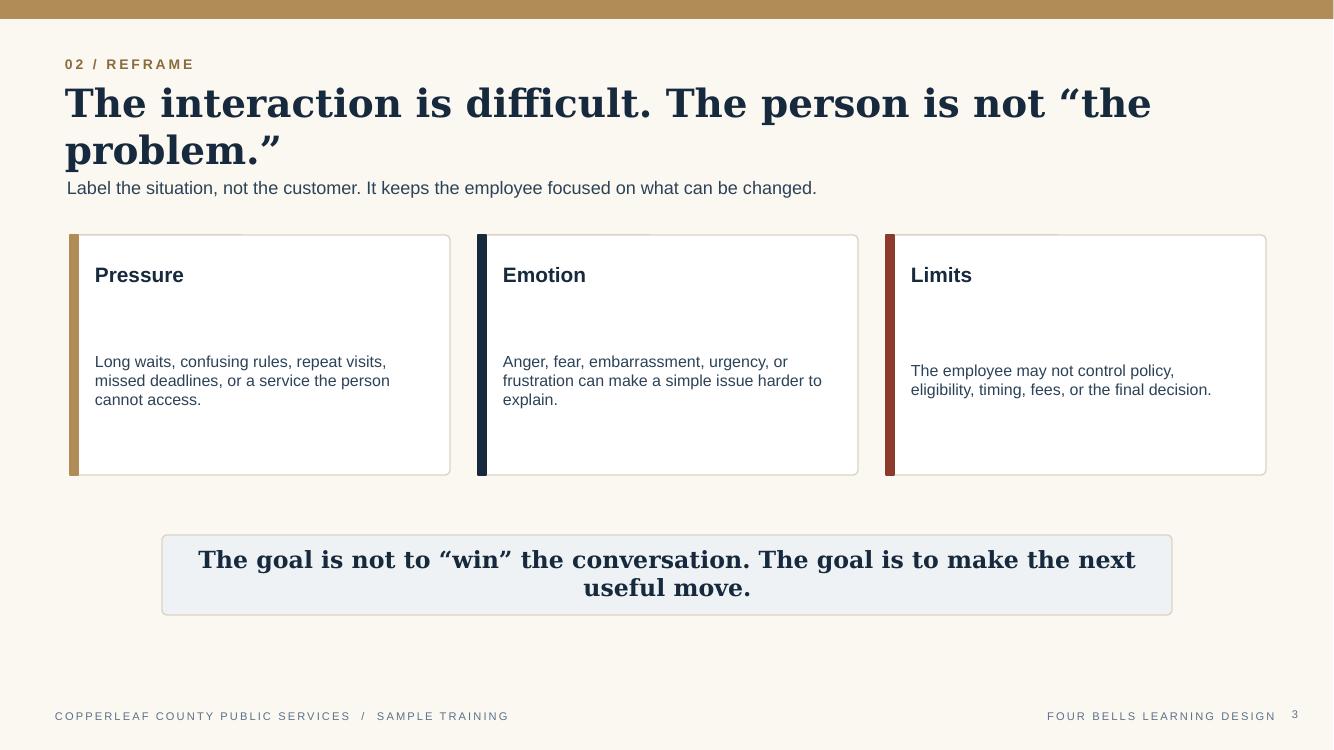
Slide deck · 10 slides
Built to be taught, not read silently. Short claims, one idea per slide, and a reframe early on — the interaction is difficult, the person is not — that heads off the most common way this kind of session goes sideways.
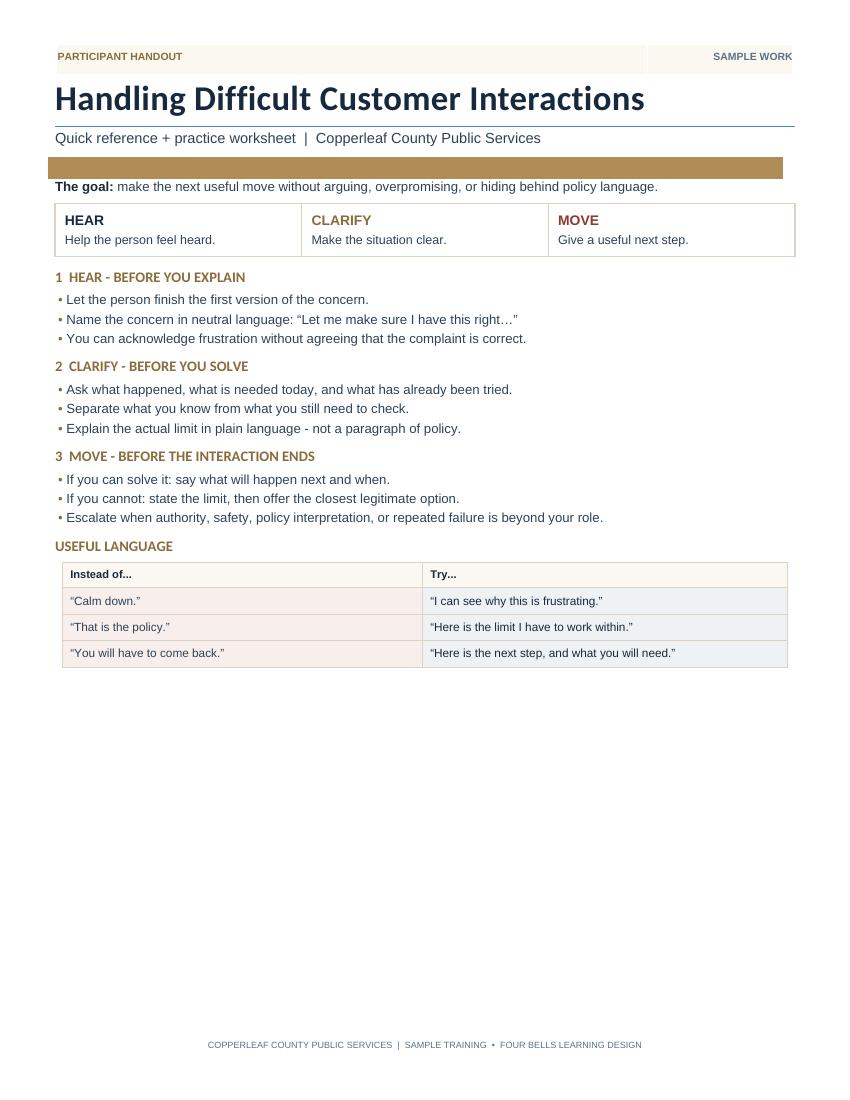
Participant handout · 2 pages
The deck disappears after the session. This doesn't. A tight quick-reference on one side, the practice scenario and knowledge check on the other — built for a desk, not a binder.
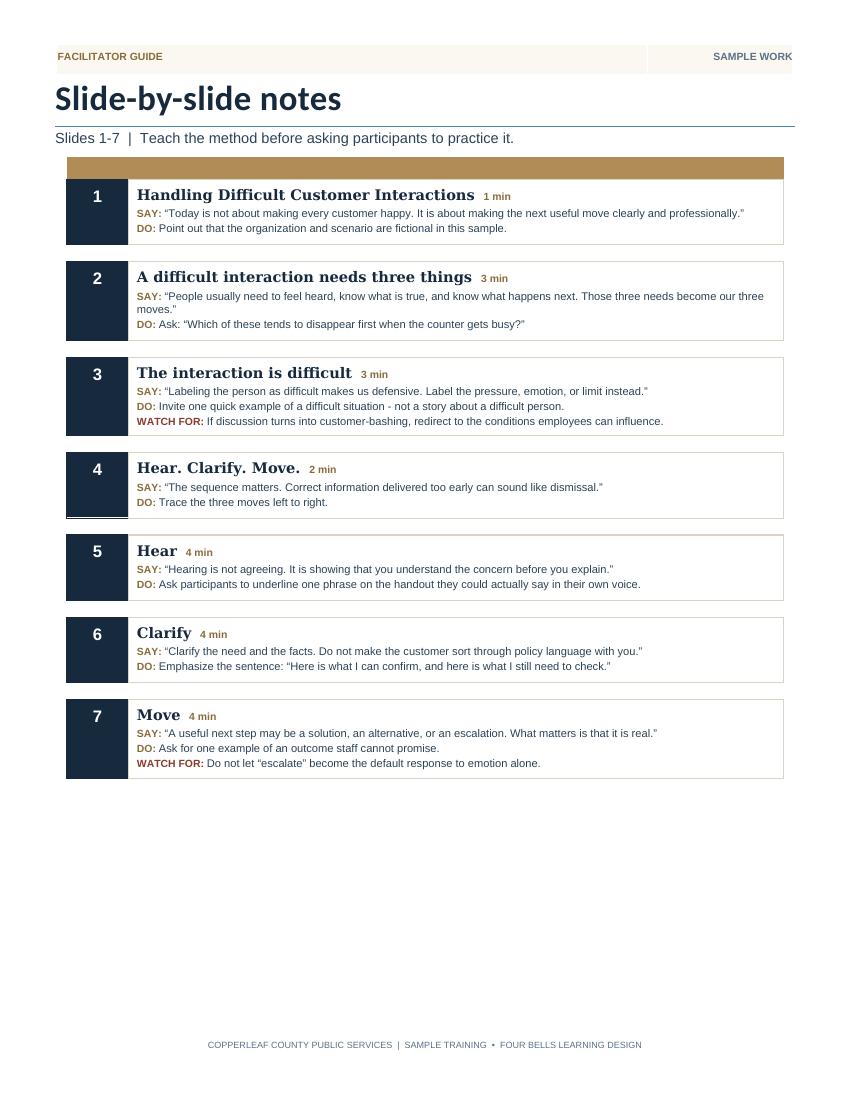
Facilitator guide · 3 pages
The real test of a training package: can a facilitator who didn't design it run the room well? Every slide gets what to say, what to do, and — where it matters — what to watch for when the room drifts.
Hear before Clarify before Move — the guide says explicitly that explaining before the person feels heard makes even correct information sound dismissive. The order is the lesson, not a formatting choice.
The practice case gives staff real ambiguity — a flag they can see but can't yet explain — instead of a scenario with an obvious right answer. That's what makes the rehearsal worth having.
Every slide's WATCH FOR note exists because a facilitator who isn't Four Bells has to be able to run this well on their own, the first time, without a debrief call.
Paired with the sample SOP, the sample decision job aid, and the sample onboarding guide, this shows the same underlying discipline applied to four different moments of use: reading alone, deciding fast, learning in a room, and taking over a role.
Copperleaf County Public Services is a fictional organization created for this sample. The package demonstrates structure, facilitation design, and assessment — not a validated policy or escalation framework for any real organization. A production version is built against your actual policies, terminology, and the situations your team really faces.